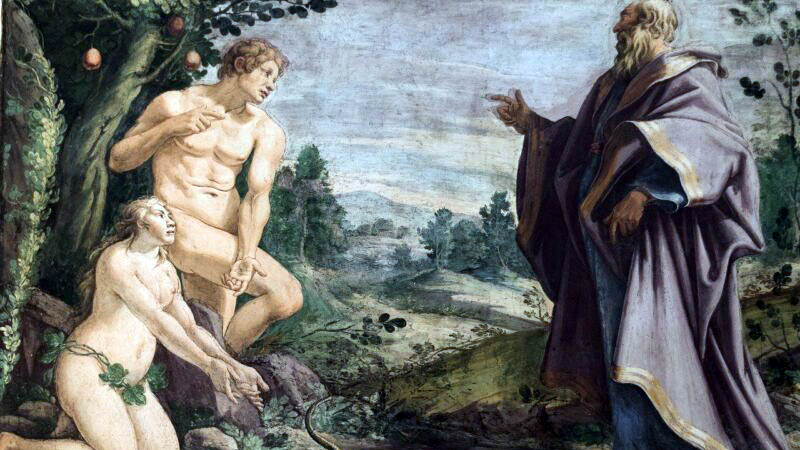
The story of Adam and Eve in Genesis tells us that the woman saw the fruit of the tree as good to eat, pleasing to the eye, and capable of making one wise. She ate it and shared it with her husband. Almost immediately, something changed. They became aware of their nakedness and felt exposed. Embarrassed, they covered themselves with fig leaves.
(Genesis 3:6–7)
The traditional interpretation of this story—often called “Original Sin”—is familiar. Humanity disobeyed God. God discovered the disobedience. As punishment, humanity was cast out of paradise into a world marked by suffering, labor, and death. This reading has shaped centuries of religious teaching and still influences how many people understand the human condition.
But there is another way to look at this story—one that feels more consistent with the teachings attributed to Jesus in the Gospels.
Rather than seeing disobedience as the core issue, this perspective suggests that the real turning point was a shift in perception. The moment Adam and Eve believed they were separate from their source—from God—they experienced themselves as isolated, exposed, and afraid. In other words, the “fall” wasn’t a punishment imposed from outside, but a change in how humanity understood itself.
Seen this way, the problem wasn’t eating the fruit. It was believing that life could be lived independently of its source.
This distinction matters. Jesus speaks repeatedly of radical forgiveness. “Seventy times seven.” If disobedience alone were the issue, forgiveness would have resolved it immediately. But the belief in separation is different. It creates an inner experience of exile that cannot be undone by decree, only by recognition.
In this reading, God does not expel humanity from paradise. Humanity experiences itself as expelled because it believes it is no longer at home in its source. Shame, fear, and hiding follow naturally from that belief.
Yet even Genesis undercuts the idea of real separation. God breathes life into humanity, and that breath becomes life itself. If your life is the very breath of God, separation is not just unlikely, it’s impossible. Just as you cannot exist apart from your own breath, life cannot exist apart from its source.
This is not just a reinterpretation of an ancient story. It echoes the heart of Jesus’ teaching—that truth is not something earned through obedience, but something recognized. A truth that sets people free, not by changing their circumstances, but by changing how they see themselves.
This understanding doesn’t belong to any single religion or belief system. It doesn’t depend on using the word “God” at all. Call it Life. Being. Source. Awareness. The name doesn’t matter. What matters is the recognition that nothing exists apart from it.
Jesus’ parable of the Prodigal Son points to the same insight. The son isn’t rejected or punished; he simply believes he has wandered beyond belonging. The return requires no transaction—only recognition.
Seen this way, the heart of the Gospel is simple and radical: you were never truly separate from your source. The sense of exile was always an illusion. And what was never lost does not need to be earned back.